- General Guidelines: What to Expect During Rhinoplasty Recovery
- Main Factors Affecting the Healing Process
- What Is Normal and When to Contact Your Doctor
- How Does the Nose Heal After Rhinoplasty?
- The First Week — the Period of Most Pronounced Swelling
- The First Month — Initial Recovery
- 3–6 Months — Contour Formation
- From 6 Months to One Year — Stabilisation of the Result
- Possible Risks and Complications After Rhinoplasty
- Main Restrictions During Rhinoplasty Recovery
Rhinoplasty is one of the most complex and demanding plastic surgery procedures. It requires precision from the surgeon and patience and understanding from the patient regarding the rhinoplasty recovery process. The final aesthetic and functional results do not appear immediately after the splint is removed. Instead, they develop gradually over several months and sometimes over a year or longer.
General Guidelines: What to Expect During Rhinoplasty Recovery
After surgery, the skin, mucous membranes, cartilage, and bone structures gradually adapt to the changes. Therefore, during the first few weeks, the nose may not look the way the patient expected or as it appeared during preoperative simulation.
3D simulation helps discuss the desired changes and establish a shared vision of the expected outcome. However, it cannot guarantee that the final appearance of the nose will exactly match the simulated image.
Main Factors Affecting the Healing Process
- Skin thickness and characteristics. Thick skin usually retains swelling for longer, particularly around the tip of the nose. With thin skin, contour irregularities may be more noticeable, which is why the surgeon’s work requires exceptional precision.
- Extent of surgery. Recovery after rhinoseptoplasty involving correction of the nasal septum and bony structures may take longer than recovery after an isolated nasal tip correction.
- Surgical technique. The degree of tissue trauma may affect the severity of swelling and bruising, as well as the overall length of the recovery period.
- Individual characteristics. Age, general health, susceptibility to swelling, and the rate of tissue regeneration can all influence healing.
- Following postoperative recommendations. Proper postoperative care helps create optimal conditions for healing and reduces the risk of unwanted complications.
What Is Normal and When to Contact Your Doctor
During the first few days after surgery, patients may experience:
- swelling of the nose and surrounding tissues;
- bruising under the eyes;
- nasal congestion caused by swelling of the mucous membranes;
- minor bloody or blood-tinged discharge;
- temporary numbness or reduced sensation at the tip of the nose;
- moderate discomfort or a feeling of pressure.
You should contact your doctor if you experience sudden or increasing pain, significant bleeding, a high temperature, worsening redness or swelling, purulent discharge, a sudden deterioration in your general condition, or any other symptoms your surgeon has advised you to monitor.
How Does the Nose Heal After Rhinoplasty?
To prevent rhinoplasty recovery from becoming a period of anxious waiting, patients should understand in advance how the nose changes during the first year after surgery. The timelines below are approximate, as recovery depends on the extent of surgery, tissue characteristics, and the individual response of the body.
The First Week — the Period of Most Pronounced Swelling
This is usually the period of greatest physical discomfort. A special splint or thermoplastic nasal cast is placed on the nose to stabilise the operated structures.
Swelling and bruising often peak on days 2–3 and then gradually begin to subside. Nasal breathing may be difficult due to swelling of the mucous membranes.
The nasal cast, sutures, and internal splints are removed according to the timeline determined by the surgeon. The exact timing depends on the type and extent of the procedure.
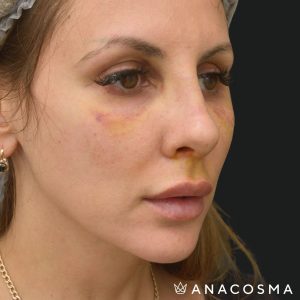
The nose one week after rhinoplasty
The First Month — Initial Recovery
Once the nasal cast has been removed, the patient sees the new shape of the nose for the first time. However, this is not the final result: the tissues remain swollen, and the shape continues to change.
Swelling may persist longest around the nasal tip and bridge. The nose may temporarily appear wider, overly upturned, or firm to the touch. Temporary asymmetry caused by uneven swelling may also occur.
During the first few weeks, bruising gradually fades, and nasal breathing improves as the swelling of the mucous membranes decreases. Many patients return to work and social activities after approximately 1–2 weeks, although the exact timing depends on the individual recovery process.
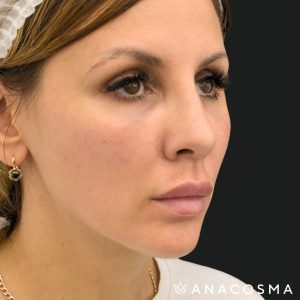
The nose one month after rhinoplasty
3–6 Months — Contour Formation
During this period, most of the visible swelling usually subsides, and the contours of the nose become more defined. The shape of the bridge and tip gradually emerges, the tissues soften, and sensation begins to return.
Mild residual swelling may still remain, particularly in patients with thick skin or after extensive correction.
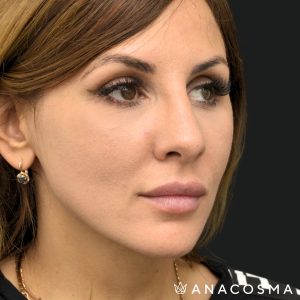
The nose four months after rhinoplasty
From 6 Months to One Year — Stabilisation of the Result
During this period, deep tissue swelling continues to decrease, and the tissues gradually adapt to the new shape. The nasal tip becomes more defined, the contour smooths out, and sensation improves.
It is at this stage that the changes in the nose after rhinoplasty become particularly noticeable. In most cases, the final result is assessed at approximately 12 months. However, residual swelling, especially around the nasal tip, may sometimes persist for 12–18 months.
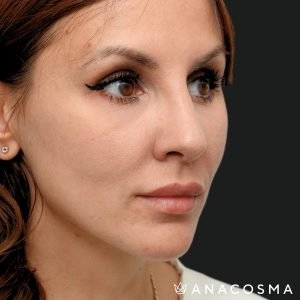
The nose one year after rhinoplasty
Possible Risks and Complications After Rhinoplasty
Like any surgical procedure, rhinoplasty involves certain risks. Complications do not occur in every patient, but it is important to be aware of them before surgery.
Potential complications include:
- Difficulty breathing through the nose. This may be associated with prolonged swelling of the mucous membranes, the formation of adhesions, or changes to the internal structures of the nose.
- Bleeding or haematoma. Minor bloody discharge may be normal during the first few days. However, significant or prolonged bleeding requires medical assessment.
- Infectious complications. These are uncommon but require timely diagnosis and treatment.
- Aesthetic changes. Possible issues include asymmetry, contour irregularities, excessive or insufficient elevation of the nasal tip, callus formation, or a result that does not meet the patient’s expectations.
- Changes in sensation. Numbness of the nasal tip or skin is usually temporary, although the speed of recovery may vary.
- The need for revision surgery. In some cases, an additional procedure may be recommended after healing is complete.
A thorough preoperative assessment, an experienced surgeon, an appropriately selected surgical technique, and adherence to postoperative recommendations help reduce these risks but cannot eliminate them completely.
Main Restrictions During Rhinoplasty Recovery
Your surgeon will provide individual recommendations based on the extent of the procedure and the course of healing. Patients are generally advised to:
- Avoid putting pressure on the bridge of the nose. The appropriate time to resume wearing glasses should be discussed with your surgeon. Following correction of the bony structures, you may need to avoid wearing frames temporarily or use special methods to support them.
- Sleep on your back with your head elevated. This helps reduce swelling and protects the nose from accidental pressure during sleep.
- Avoid overheating and excessive sun exposure. Saunas, hot baths, and prolonged exposure to the sun may increase swelling. Your doctor will determine the exact duration of these restrictions.
- Limit physical activity. Intense exercise, heavy lifting, and prolonged bending may increase the risk of bleeding and swelling. Physical activity should be resumed gradually and only after receiving your surgeon’s approval.
- Follow proper hygiene instructions. The nasal passages should be cleaned, and saline solutions, nasal drops, or other products should be used only as prescribed by your doctor.
- Protect the nose from injury. During the healing period, contact sports and any situations that could result in an impact to the face should be avoided.
- Do not blow your nose without your doctor’s permission. During the early postoperative period, doing so may increase swelling or cause bleeding.
A natural and harmonious rhinoplasty result depends on careful surgical planning, the surgeon’s expertise, the individual characteristics of the patient’s body, and adherence to postoperative recommendations. During a consultation, an ANACOSMA plastic surgeon will explain how the nose heals after rhinoplasty, discuss possible changes and restrictions, and create a personalised postoperative follow-up plan.
References

Leading plastic surgeon, PhD in Medicine, Head of the Department of Surgery. Co-founder of the clinic, member of ISAPS and ASBS (USA).